
Run a Gwinnett Voter Lookup
The official Georgia My Voter Page is the first stop for checking one's own registration. It asks for four identity details and then tests them against the state registration system. Select GWINNETT in the county menu. The first initial and surname should match the registration, while the date of birth helps keep the result from acting like an open name directory.
| Lookup field | Input | Required | Gwinnett search note |
|---|---|---|---|
| First Initial | Text | Yes | Enter the voter's first-name initial |
| Last Name | Text | Yes | Use the registered surname |
| County | Dropdown | Yes | Select GWINNETT |
| Date of Birth | Date or text | Yes | Follow the format requested by the portal |
| Submit | Button | Not applicable | Runs the identity-gated match |
If no match appears, check the surname, registered county, and birth date before assuming the record is missing. A recent move may mean the record remains tied to a prior county. Gwinnett Voter Registrations and Elections can review a mismatch or explain the official update process. My Voter Page is not a browseable Gwinnett County voter roll.
The My Voter Page screen shows the exact fields used for a Gwinnett County voter registration lookup.
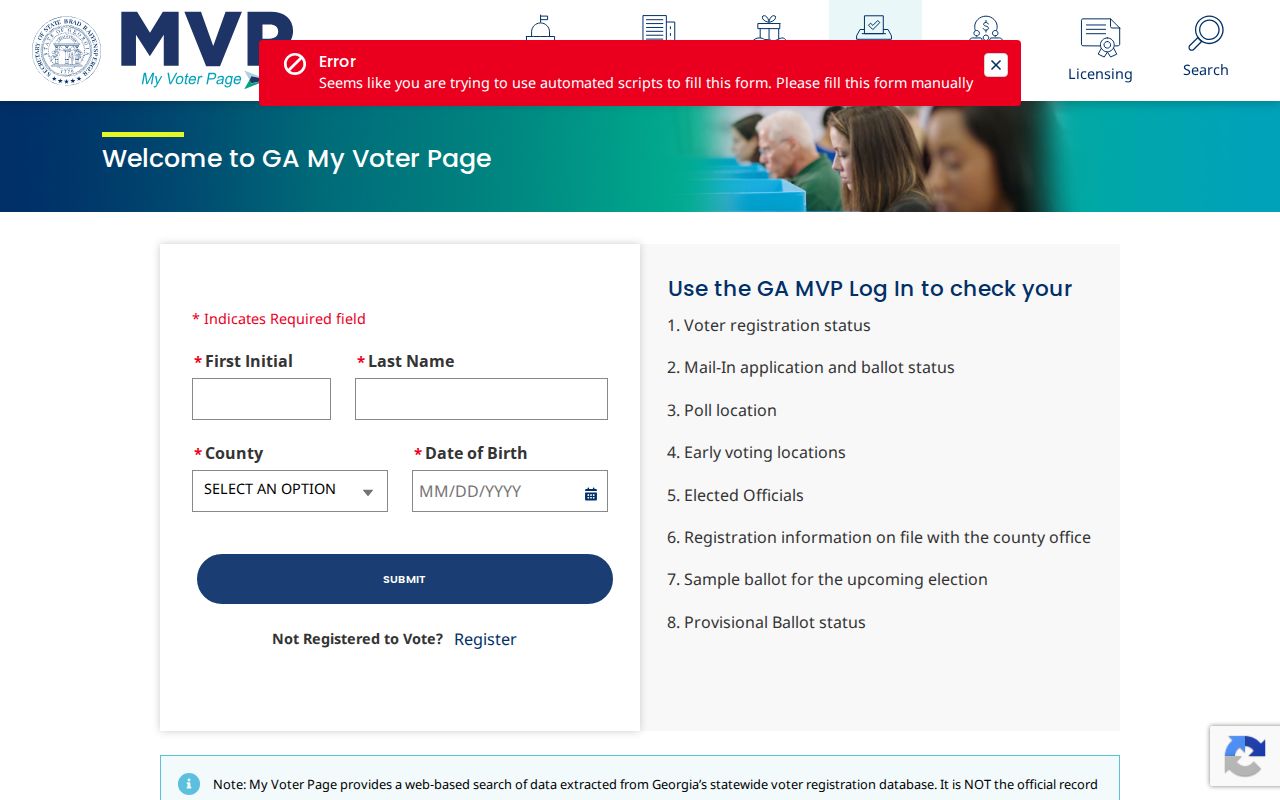
That identity check separates a personal registration query from an order for a county or statewide voter file.
Gwinnett Voter Record Results
A successful match gives more than a simple active-or-inactive label. It can show registration information on the county file, the assigned polling place, precinct and district details, and elected officials linked to those districts. During an election cycle, the account can also provide a sample ballot, early-voting information, and mail-in ballot application or status details.
Provisional-ballot status may appear when it applies. These details are operational and can change as election dates, precinct plans, or district lines change. Check the live portal before relying on an older printout.
| Registration | Status and information held on the county file |
|---|---|
| Voting place | Polling location and precinct assignment |
| Districts | District codes and associated elected officials |
| Election material | Sample ballot and early-voting information when available |
| Ballot tracking | Mail-in and provisional status when applicable |
Note: A sample ballot shows the contests presented to a voter; the system never publishes how that person marked a ballot.
No Georgia Party Registration
Georgia uses open primaries and does not register voters by political party. That fact matters when reading Gwinnett voter records. A field labeled “last party voted” refers to the primary in which a voter participated. It is not a permanent party affiliation, and it does not reveal a vote within any contest.
This distinction corrects a common myth about voter registration data. Participation history may state that someone voted or give a last-voted date. Ballot choices remain secret. Treating primary participation as a fixed personal belief would go beyond what the record proves.
Fields in Gwinnett Voter Rolls
An ordered voter list can contain far more fields than the personal lookup result. Available columns depend on the product requested, but the official order material identifies names, registration details, addresses, geographic codes, and participation fields. A registration number identifies the elector's file. Precinct and district fields place that record within election administration boundaries.
The full file can include county, registration number, status and reason, name and suffix, birth year, segmented residence and mailing addresses, county and municipal precincts, municipality, land lot and district, and registration, modified, contact, and voter-created dates. District columns may cover congressional, legislative, judicial, county commission, school board, council, water, and fire areas. Race, gender, last party voted, and last vote date are also listed among official columns.
Confidential voter data. Under O.C.G.A. §21-2-225 and the official order rules, lists omit telephone numbers, full dates of birth, full or partial Social Security numbers, and driver's-license numbers. VoteSafe can shield address information for qualifying survivors.
Birth year is not the same as a full birth date. Residence and mailing addresses may also differ. Protected-voter information and other confidential identifiers are withheld rather than exposed in the voter file.
VoteSafe and Protected Voter Addresses
Georgia VoteSafe gives qualifying survivors of domestic violence or stalking a route to protect residence information in election records. The protection is not a reason to seek the address from some other public source. A withheld address should stay private.
Public access never authorizes intimidation, threats, or unwanted surveillance. Georgia stalking statutes include O.C.G.A. §§16-5-90 and 16-5-91, while voter-list law separately controls use of elector data. Anyone facing an immediate threat should contact law enforcement and preserve messages or screenshots.
Order Gwinnett Voter Registration Files
The Secretary of State's Voter List Order Form is the formal route for a paid county, municipal, district, precinct, or statewide file. County and local lists arrive as CSV files. The statewide file is text and must be imported into spreadsheet or database software. Normal production is one to two weeks after payment, with email delivery and no expedited service.
- Choose a statewide file or specify the requested list type. Local choices include active voters or active and inactive voters.
- Identify Gwinnett County and, if needed, a municipality, district, or up to five precincts. Describe the order in detail.
- Complete payment-tracking fields, pay by check or money order to the Secretary of State, and sign the statutory warning.
- Import the delivered CSV or text file with care, keeping status, address, and district columns distinct.
The July 2024 schedule lists a Gwinnett county voter list at $70, a county district at $45, and up to five county precincts at $35. Municipal voter lists are $65; municipal precinct and district files cost $35 and $45. Other published rates include $125 for a U.S. congressional district, $75 for State House, $95 for State Senate, $125 for a judicial circuit, and $485 for the statewide file. Fees are nonrefundable, and custom orders are not offered.
Limits on Gwinnett Voter Data
O.C.G.A. §21-2-601 makes commercial use of an elector list a misdemeanor. The warning appears on the order form and applies after delivery, not just while placing the order. Civic, personal, and genealogical research must remain consistent with law and must never become stalking, harassment, or harm.
Voter data also has limits as evidence. A participation date does not reveal a selection. A mailing address does not always prove current residence. An inactive label does not by itself prove that a person is ineligible to vote. Verify a disputed registration issue with the elections office instead of drawing a broad conclusion from one row.
Gwinnett Voter Records Office
Gwinnett Voter Registrations and Elections handles county registration questions and election-record procedures. The office is in the Beauty P. Baldwin Building, 455 Grayson Highway, Suite 200, Lawrenceville, GA 30046. Call 678-226-7210 or fax 678-226-7208.
Registration assistance
Use the county office when My Voter Page does not match, an address or name needs review, or a status needs explanation.
Election records
Voter Registrations and Elections is covered by the Gwinnett open-record portal. General court files follow a different custodian route.
Georgia's state organization directory helps distinguish the Secretary of State from other agencies when routing a statewide voter-record question.
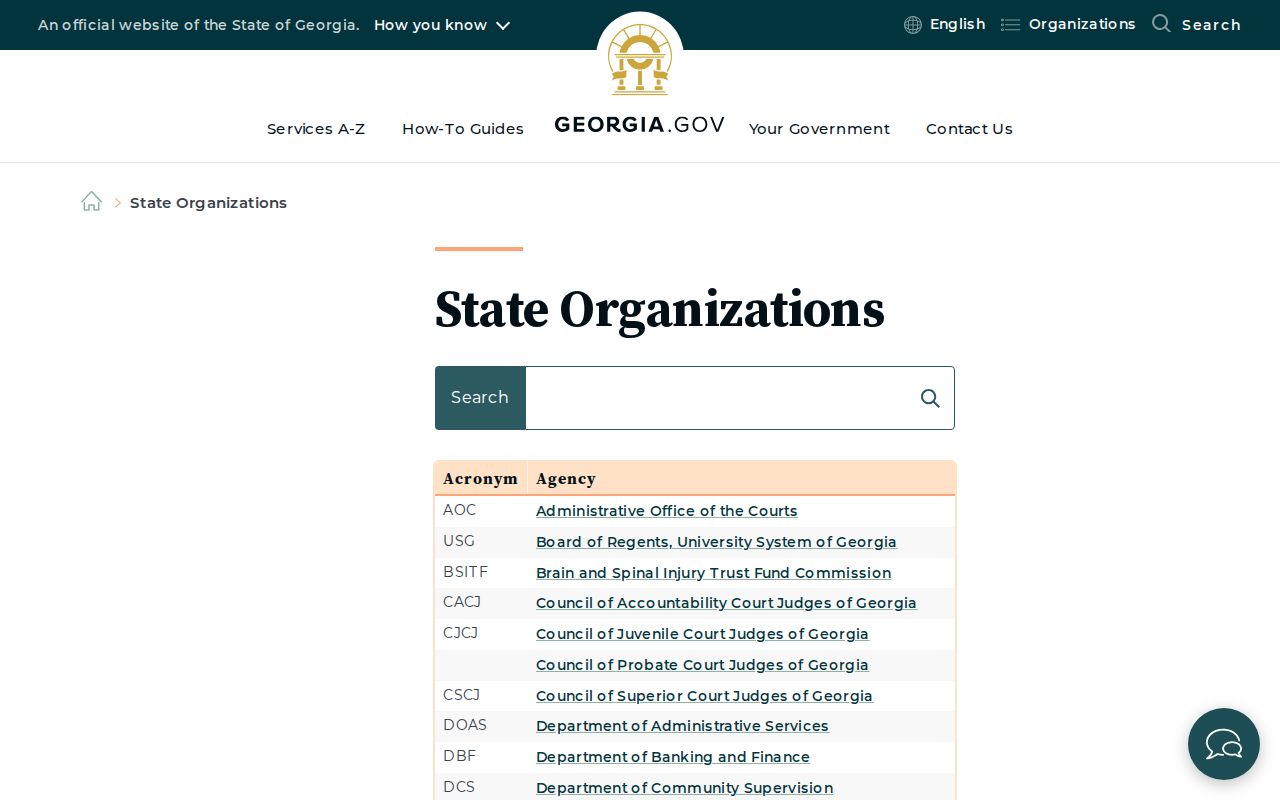
The agency list is a routing aid, while the Gwinnett Elections office and Secretary of State voter services remain the relevant custodians.
Gwinnett Registration Status Changes
Active, inactive, and cancelled describe different points in registration maintenance. County and state processes let voters update or cancel their own registration. Gwinnett also publishes a process for reporting a deceased voter. Address confirmation and National Change of Address procedures can move a record toward inactive status under state and federal rules.
Inactive does not mean automatically ineligible. A status result should prompt review of the live account and contact with Gwinnett Elections when needed. The official process, not a third-party inference, controls whether and how the record is updated.
Note: Check My Voter Page before an election deadline so there is time to correct a county, name, address, or status issue.
Gwinnett Voter Counts by City
The June 2026 Registered Voters Report gives a timely view of eligible voters within listed municipalities. It reports 196,780 across those municipal rows, including 31,740 in Mulberry, 29,422 in Peachtree Corners, 21,622 in Duluth, and 18,687 in Lawrenceville.
Those figures are not the full Gwinnett County registration total. Large parts of the county are unincorporated, and a postal city label does not always establish municipal boundaries. The report even lists the new City of Mulberry and Rest Haven separately. Use municipal counts for the scope they state, not as a substitute for a countywide voter roll.
Historical Gwinnett Voter Records
Older poll books and registration registers require a fallback chain because no verified online Gwinnett series with exact years was found in the research. Start with the Georgia Archives catalog, then ask Gwinnett election-record custodians about retained county material. The FamilySearch catalog for Gwinnett can identify additional record books where access agreements allow viewing.
Searchers should confirm the title, date span, precinct, and keeper before treating an old list as complete. Gwinnett County was created in 1818, so earlier research may require state, predecessor, or tribal-context sources. Historical rolls can help place a person in a civic district at a point in time, but they do not prove a present address or disclose a ballot choice.