
Find People Across Gwinnett Records
No single county index identifies everyone. The strongest starting source depends on the fact already known. An address belongs first in the Board of Assessors property search; a buyer, seller, or former owner belongs in the deed index; and a lawsuit or estate belongs in the court party search. A former classmate may be easier to trace through a yearbook or newspaper than through a current government file.
Keep each result separate until two facts agree. A middle initial, spouse, parcel, age, profession, or case location can separate people with the same name. Gwinnett's diverse population also makes spelling important. Try hyphens, spaces, initials, maiden names, compound surnames, and business or trust names without inferring identity from a surname alone.
- Write down the name, date range, address, and relationship already known.
- Choose the custodian whose record was created by that event.
- Search broad name variants, then narrow by date, parcel, or court.
- Open the index detail and note its document or case identifier.
- Confirm the match in an independent official or archival source.
Gwinnett County Search Custodians
The Clerk of Superior Court is the main hub for deeds, liens, plats, trade names, notaries, divorce files, and Superior, State, and Magistrate cases. Probate Court keeps estates, wills, marriages, and local birth and death certificates. The Board of Assessors connects owners with parcels, while county Elections and the Georgia Secretary of State handle voter data. These offices do not share one universal name search.
Office boundaries matter. Gwinnett's general open-record portal serves executive departments, but it expressly excludes Superior, State, and Magistrate clerk files. Judicial records go to the court portal or clerk instead. Municipality records also stay with the city that made them, while permits and code files for unincorporated land route to county Planning and Development.
Probate Court Records
75 Langley Drive
Lawrenceville, GA 30046
Gwinnett Probate Court
For the full custodian and request rules, use the Gwinnett County public records system.
Search Gwinnett Deed Names
The GSCCCA Real Estate index is the official statewide route for Gwinnett deeds, security deeds, liens, cancellations, and plats. It indexes parties by role. A grantor transfers an interest; a grantee receives it. Search both roles because the same person may buy in one instrument and sell in another. A book and page or instrument number is the key needed to retrieve the indexed filing.
| Search control | Useful entry | Why it helps |
|---|---|---|
| County | Gwinnett | Limits statewide results |
| Name or party | Surname, person, business, or trust | Finds indexed grantors and grantees |
| Instrument type | Deed, lien, plat, cancellation | Separates record classes |
| Book/page or number | Known citation | Opens a direct document trail |
| Date range | Recording dates | Narrows common names |
The official Gwinnett deed search screen shows how county, party, instrument, and date controls work together.
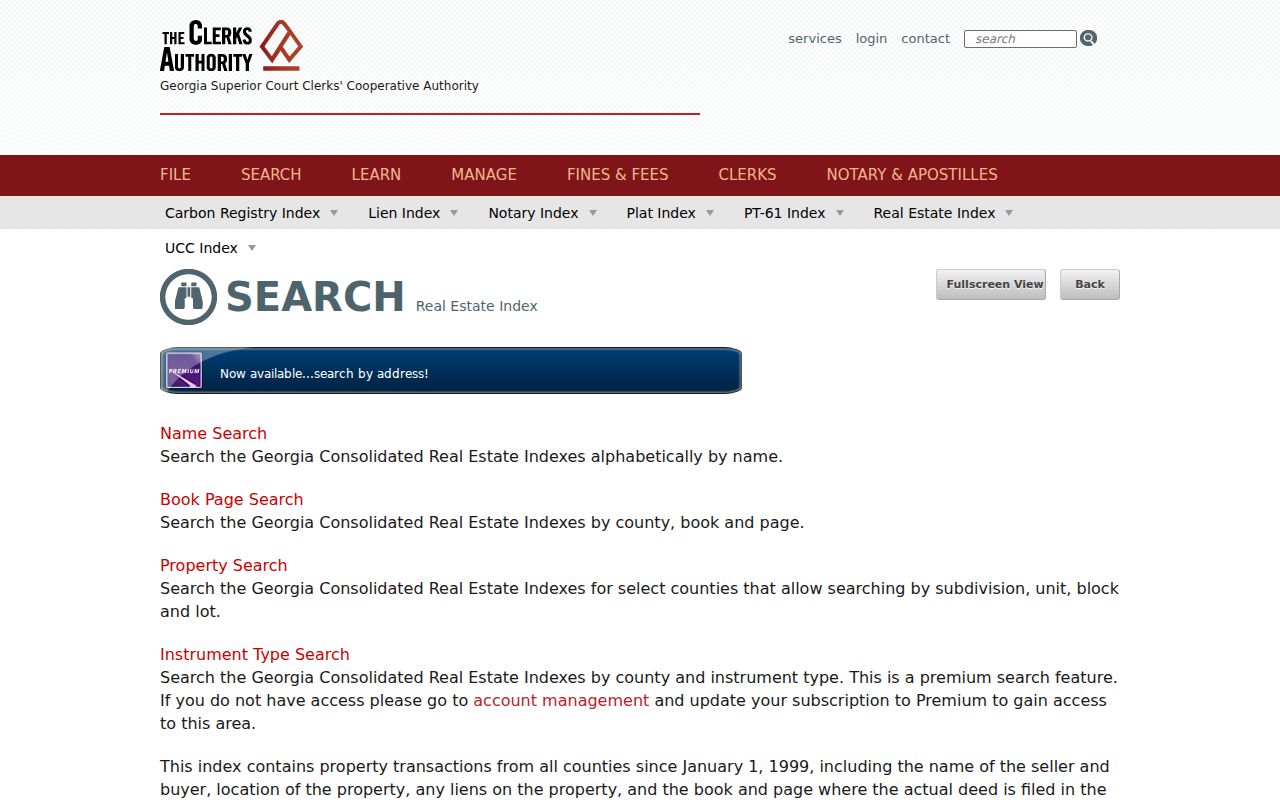
The image is an index entry point, not proof that every document image is free. GSCCCA account or payment terms may apply, while the clerk offers counter access and local copies.
Link Gwinnett Parcels to People
The assessor search accepts owner name, property address, or parcel ID. Its parcel card may show the owner, tax-mailing address, physical or situs address, legal description, subdivision, values, sales history, and a map link. A parcel ID joins the assessor and GIS systems; a book/page or instrument number joins the parcel trail to the clerk's deed image.
Do not treat ownership as residence. The owner, occupant, and tax-mail addressee can be three different people. A situs address locates the land, while the mailing address shows where tax notices go. Confirm an address-based identity with a deed, directory, court file, or other independent record.
Note: Legal lot and subdivision text may find an older instrument when a modern street address does not appear in the deed index.
Check Gwinnett Court Party Records
The Gwinnett court search router separates two systems. Odyssey covers Superior, State, Magistrate, and open Probate estate cases. Recorder's Court, which handles county ordinance and traffic matters, has its own route. A party search may accept first, middle, and last name, business name, case type, case number, and filing dates.
A docket can show the court, case number, case type, filing date, status, party roles, events, hearings, and judicial officer. A docket is the court's event list. It does not prove an allegation, and a name match alone does not establish identity. Read the disposition and obtain the file from the proper clerk when the result matters.
| Court | Main records | Name-search route |
|---|---|---|
| Superior | Felony, divorce, equity, major civil | Odyssey and re:SearchGA |
| State | Misdemeanor and civil | Odyssey and re:SearchGA |
| Magistrate | Small claims and warrants | Odyssey |
| Probate | Estates and wills | Odyssey plus file request |
| Recorder's | County ordinance and traffic | Separate search |
The official court routing page makes this system split visible.
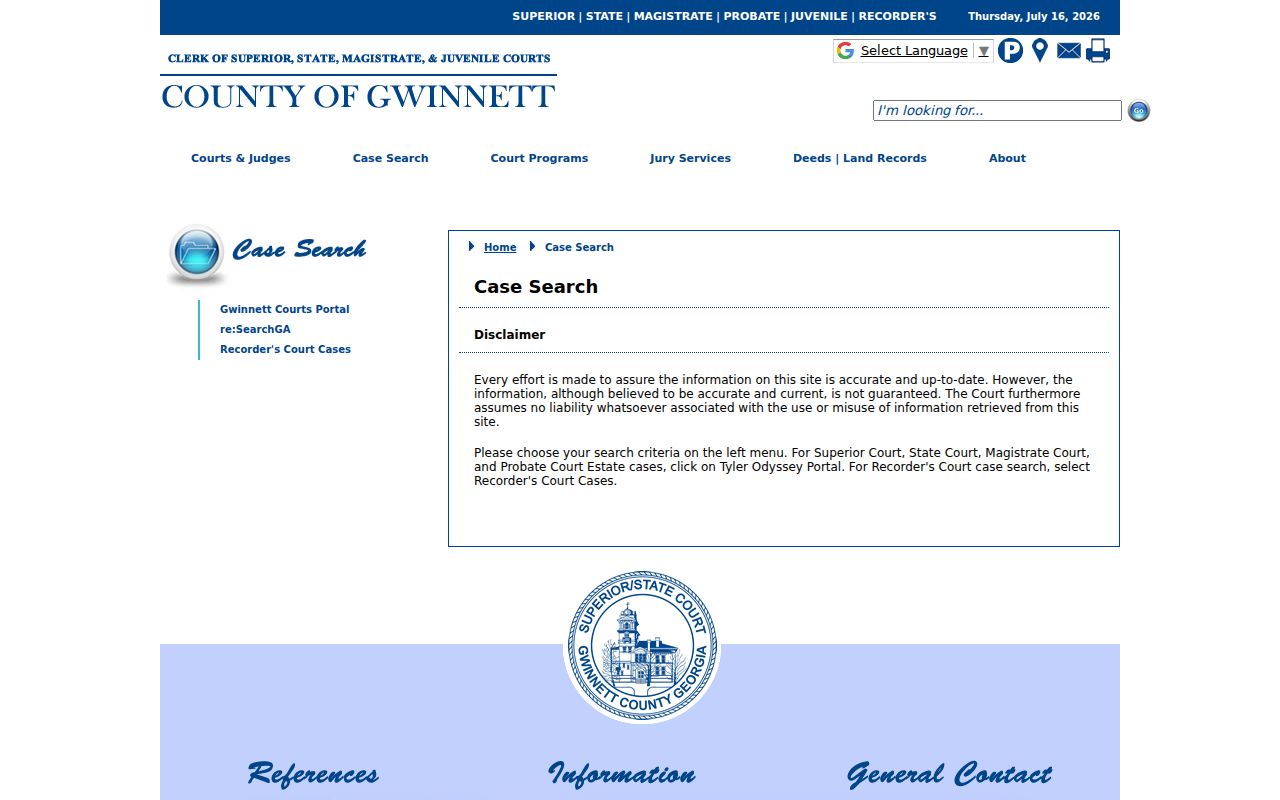
Sealed cases, juvenile matters, adoptions, and protected data remain unavailable even when a portal offers a broad search form.
Search Gwinnett Probate Records
Open estate files can connect a deceased person with a personal representative, heirs, interested parties, property, and later deed transfers. Begin with the Probate estate search, then use the Probate Records Request Sheet when the online docket does not include the needed paper. A physical file may take up to two business days to retrieve for an appointment.
Selected records can be bought through re:SearchGA. Paper copies are $1 per page, and mail requests require a referenced file, requester name, self-addressed stamped envelope, and check or money order. An obituary can help identify relatives, but it should be checked against the estate file. A person named in an obituary did not necessarily inherit.
Probate's older digital holdings add another path when a modern party search is too narrow. General estate indexes are arranged in surname groups for the 1800s through 1977, followed by A-to-Z volumes for 1977 to 1982, 1983 to 1986, and 1987 to 1990. Other surviving books include annual returns, inventories, bonds and oaths, homestead dockets, and early court minutes. Search the index first, record the estate reference, and ask Probate staff which book or file supplies the underlying detail.
Order Gwinnett Vital Records
Gwinnett Probate and Georgia DPH issue birth and death certificates under eligibility rules in O.C.G.A. Title 31, chapter 10. Birth certificates are limited to the registrant and qualifying relatives or legal representatives. Certified death copies require a direct and tangible interest, though the public may request a plain-paper death copy with the Social Security number removed.
DPH holds statewide births and deaths from January 1919. It also holds marriage records from June 1952 through August 1996; Gwinnett Probate keeps licenses it issued outside that span. A Gwinnett marriage certificate costs $10 by mail with a self-addressed stamped envelope. The current statewide first-copy fee for birth and death records is $25, with $5 same-order copies.
- Index
- A locator that points to a record but may not show its image.
- Plain copy
- A reproduction without clerk authentication.
- Certified copy
- A copy carrying the custodian's formal authentication.
- Situs
- The physical location of a parcel, not the owner's mailing address.
Search Gwinnett Jail Records Carefully
The Gwinnett Sheriff SmartWEB search accepts first, middle, and last name, booking and release date ranges, and current or released status. Results can include name, custody status, booking and MNI numbers, booking time, age, bond data, charge, statute, court case, officer, and warrant or citation details.
The live county inmate interface is a booking source, not a conviction finding.
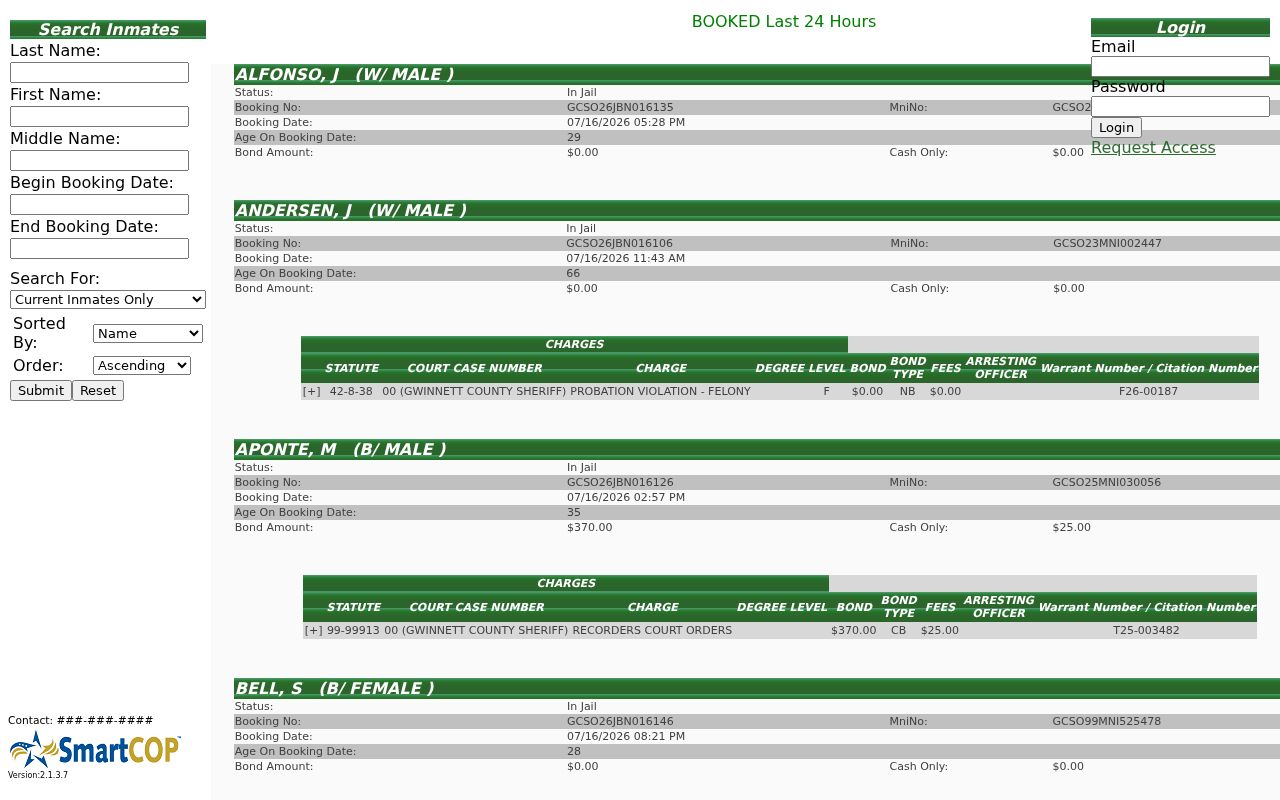
Check the related court docket for the case status and outcome. State prison custody uses the Georgia Department of Corrections offender query instead of the county jail system.
Route Gwinnett Address Searches Correctly
A Lawrenceville, Norcross, Duluth, or Suwanee mailing label does not prove that an address lies inside that city. ZIP and postal-city names cross legal boundaries in Gwinnett's large unincorporated areas. Use the GIS Data Browser to identify the parcel, municipal boundary, district, and adjacent land before asking for a permit or code file.
Record date can change the answer. Annexation and incorporation shift the office that keeps planning, licensing, or code records. Mulberry began handling planning, zoning, permits, code, and business tax functions on January 1, 2025. Deeds still route to the county Superior Court Clerk regardless of municipality.
A careful routing check keeps the request short. Retain the historic spelling, locate the parcel in GIS, identify the incorporated boundary and tax district for the year at issue, then send permits or licensing files to that city or to county Planning and Development. Municipal citations go to the named city court, not automatically to Odyssey. This sequence is useful across Gwinnett because a familiar mailing city is a postal label, while the legal boundary decides which government made and keeps the record.
Search Gwinnett Business Records
The Georgia Corporations Division search can return an entity's legal name, control number, status, formation jurisdiction, principal office, registered agent, officers, and filing history. A registered agent accepts legal service and is not necessarily the owner. Local trade names are filed with the Superior Court Clerk, while occupational-tax records depend on the municipality or unincorporated county jurisdiction.
The professional license search lets a reader filter by board or profession, name, business, license number, city, state, and status. Results may show credential type, issue and expiration dates, current status, and a path to public board orders. These sources can confirm a public role without relying on an unverified commercial profile.
Geography controls local business files as well. Gwinnett County occupational-tax and licensing channels apply to unincorporated addresses, while incorporated cities keep their own certificates and related planning records. Weekly issued-license lists can act as a current business directory, but a listing establishes a public filing rather than a person's home address. For an older local operation, combine a trade-name filing, corporation history, occupational-tax record, and newspaper legal notice, then compare names and dates across the sources.
Rebuild Gwinnett Address Histories
An old address can move forward through several sources: a reverse directory supplies an occupant, a census supplies a household, the assessor supplies a parcel owner, the deed chain supplies past owners, and an obituary or probate file supplies later family links. Each source answers a different question. Never collapse owner, resident, directory occupant, and household member into one identity without proof.
Gwinnett County Public Library's Ancestry Library Edition is available inside branches with a library barcode and PIN. It includes census, directory, vital, military, and image collections. Exact local city-directory, phone-book, yearbook, and obituary-index years were not verified, so search the catalog or ask staff rather than assuming coverage.
The deeper set of current and historic sources is organized on the Gwinnett County directories page.
Search Gwinnett Records Before 1871
The clerk documents a hard boundary: former land records burned, and the surviving deed series begins September 26, 1871. A normal chain of title cannot simply pass through that loss. For an older parcel or family, combine federal census schedules, tax digests, surviving probate and church books, newspapers, and later deeds that recite earlier ownership.
The gap is not a total dead end. Georgia Archives inventories Gwinnett deeds dated 1821 to 1881 and miscellaneous land records from 1852 to 1886. Probate's digital archive also includes early estate indexes, minutes, annual returns, inventories, bonds, and guardian records. The Georgia Archives catalog and research room and the FamilySearch Gwinnett catalog provide fallback routes when the courthouse index stops.
Later deeds may also repeat an older legal description or say that a tract is the same property conveyed in a prior transaction. That recital can preserve a name or relationship even when the cited book is gone. Compare it with tax digests, census households, church registers, and probate minutes. The goal is not to force a continuous deed chain where none survives. It is to build a supported timeline from independent records and state clearly where the courthouse evidence ends.
Note: Cite the archive collection, volume, or microfilm identifier, since a compiled family history is a lead rather than primary proof.
Use Gwinnett Records Lawfully
Public access does not permit stalking, threats, harassment, or publication of protected addresses. Georgia VoteSafe can shield a qualifying voter's residence, and Georgia Safe at Home now supplies eligible survivors and at-risk people with a substitute address for most state and local records. Do not repeat a protected address found in another source.
Official indexes are usually better evidence than commercial compilations. Third-party people finders can merge names, lag behind corrections, and omit the context needed to read a record. Use them, if at all, only as unverified leads, then return to the custodian. A careful Gwinnett County people search confirms two independent attributes beyond a common name.
Keep a short source log as the search grows. Record the portal name, search date, exact spelling used, result identifier, and whether the item was only an index or a full image. Save both negative and positive searches because a blank result may reflect a spelling choice, date filter, login wall, or older file that has not moved online. When a web trail stops, call the custodian, use the public terminal, submit a narrow Georgia Open Records Act request to the correct executive office, or ask the library and archives about the named collection.